sales@jufuwater.com +8618001362005
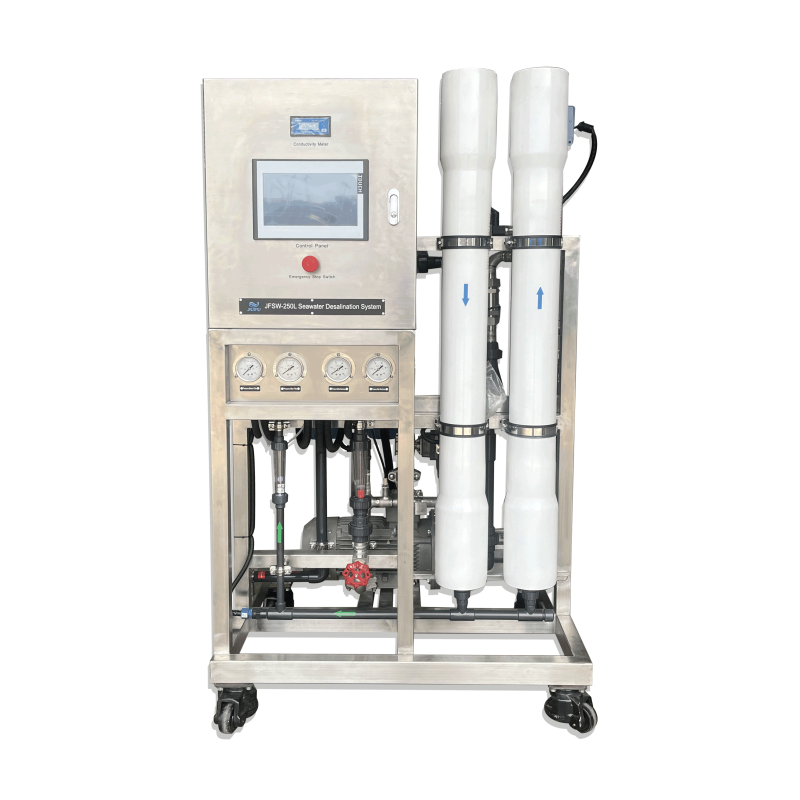
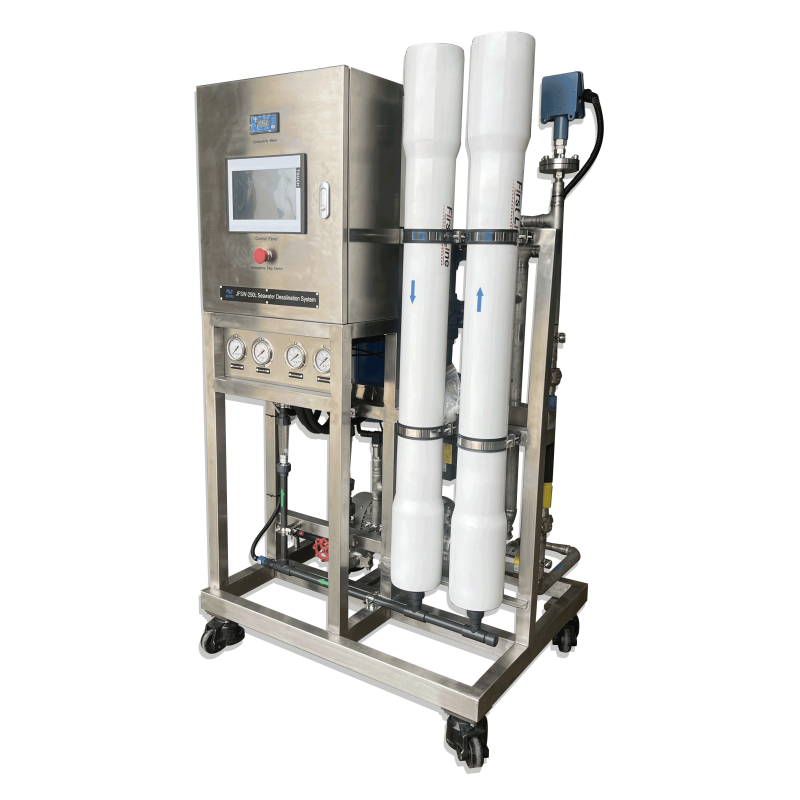
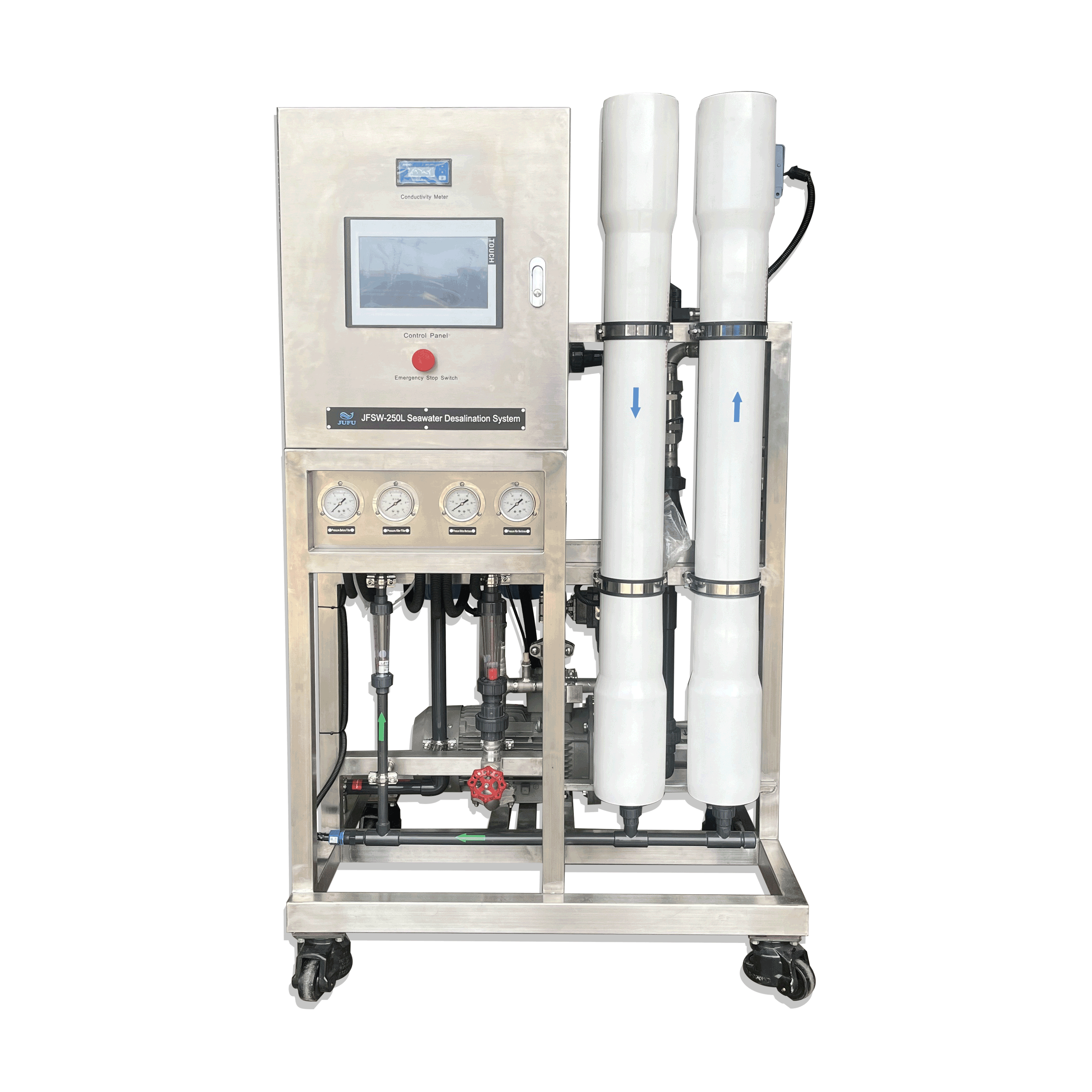
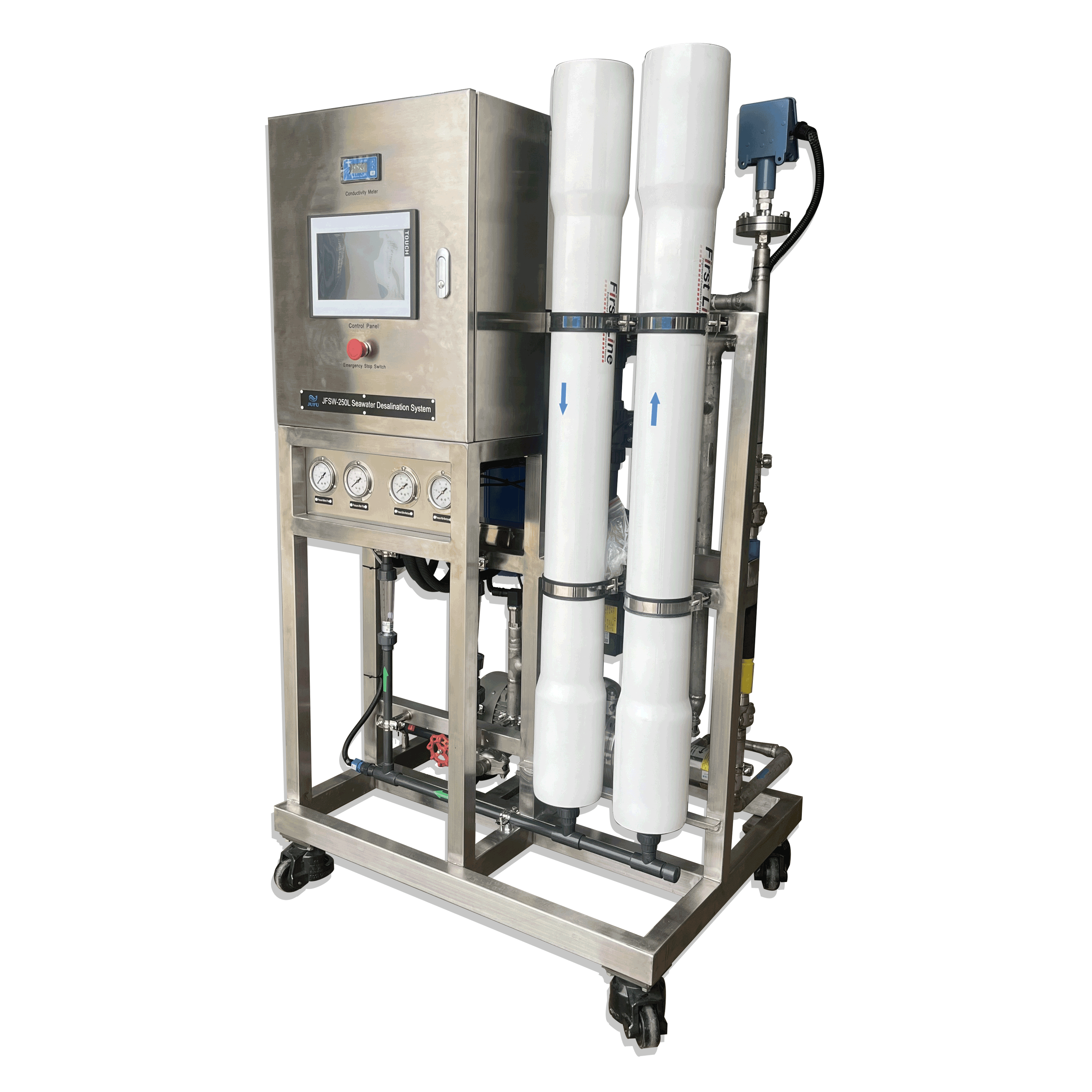
250LPH RO Seawater Desalination Water Treatment System
1. Model: JFSW-250L
2. ISO9001 & CE certified
3. Capacity: 250liter/hour
4. Desalination rate: 98%
5. Recovery rate: 35%
6. Control type: Auto
7. Applicable industries: Hotels, Restaurant,Water shop
8. Pre-shipment testing: Provide
9. Installation guidance: Online Video meeting
10. Warranty: 12 months
11. Package: Wooden case
12. Export market: United States, Spain, Poland, Italy, Australia, Canada, Mexico, Philippines, Peru, Saudi Arabia, Jamaica, Columbia, Chile, Peru,Bolivia, Argentina,Indonesia,Malaysia,Vietnam, Nigeria, Tanzania, Kenya, Morocco,Kyrgyzstan, Russia
Product Introduction of RO Water Treatment System
RO equipment is reverse osmosis equipment. Reverse osmosis equipment passes raw water through fine filters, granular activated carbon filters, compressed activated carbon filters, etc., and then pressurizes through pumps. 1/6000, 1/300 of the virus) reverse osmosis membrane (RO membrane), so that the higher concentration of water into low concentration water, while industrial pollutants, heavy metals, bacteria, viruses and other impurities mixed into the water are all isolated , so as to achieve drinking.
What is a Seawater Desalination System?
Seawater Desalination System utilize reverse osmosis to purify unwanted contaminants such as salt and minerals from untreated water. Usually the source is seawater or seaside well water.
Why is Seawater Desalination becoming more and more popular?
The lack of fresh water in the world has become a growing concern.
The challenge of water scarcity is compounded by the fact that 97% of the water on Earth is salty and found in the oceans. As a result, much of the world is turning to desalination – extracting salt from seawater on a large scale and converting it into fresh water suitable for drinking, cooking, bathing and some high-purity industrial process applications, such as electronic component manufacturing, pharmaceuticals, chemicals, boilers, water supply, medical applications and wastewater recovery systems.
The most effective and widespread form of desalination is reverse osmosis. As the technology has matured, the process has gradually become more efficient and cheaper, leading to the development of larger plants and better membranes and energy recovery methods.
The details of 250LPH RO seawater desalination
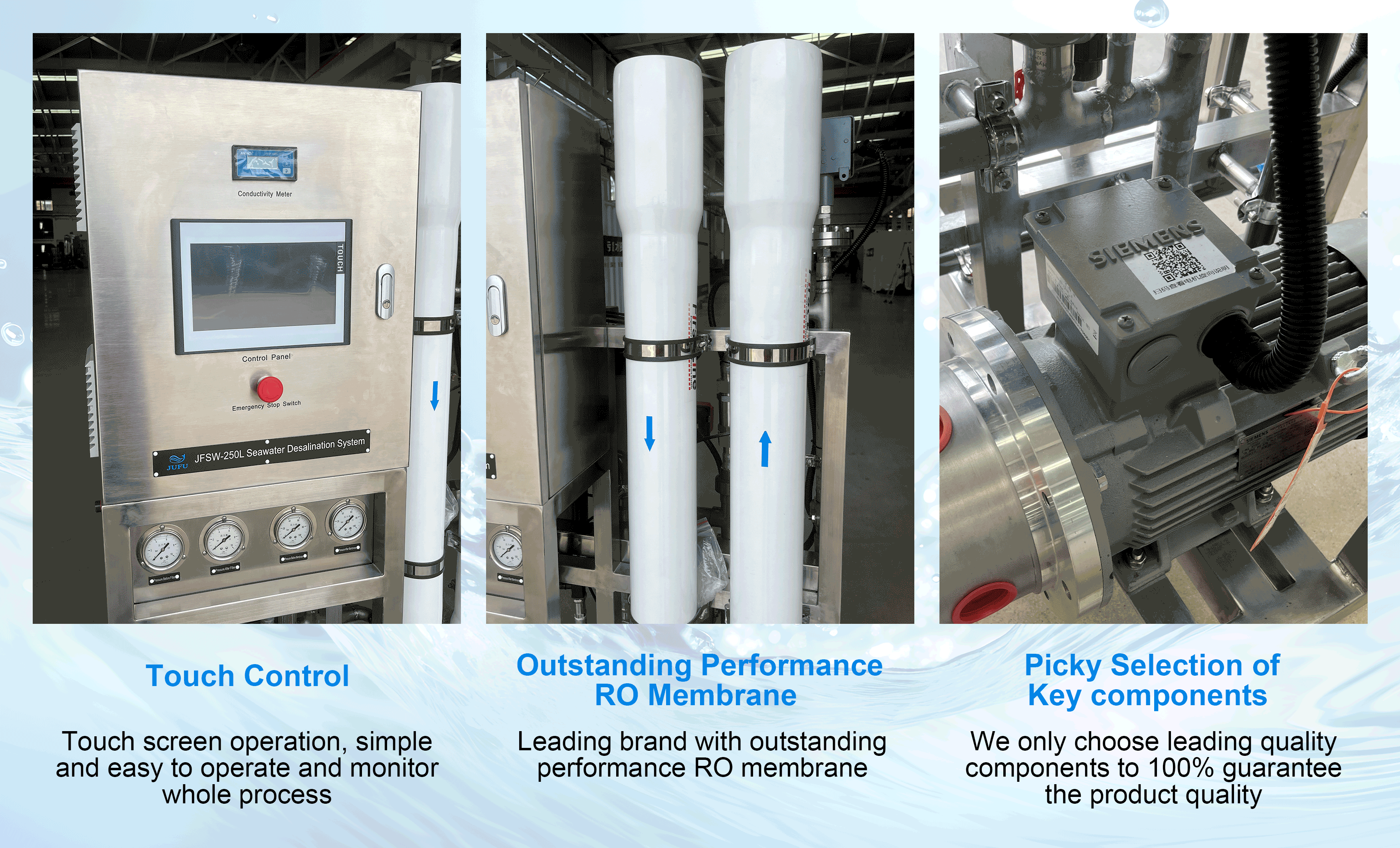
Specification of seawater desalination
| Model | JFSW-250L | ||
| Producing Capacity | 250L/H | RO membrane | 4” |
| Recovery Rate | 35% | Power Supply | Single-phase: 110/120/220V 50/60Hz |
| Operating Pressure | 3-5.5MPa | Tri-phase: 110/220/380/415V 50/60Hz | |
| Desalination Rate | 98% | Power Consumption | kW |
| Filtration Accuracy | 0.0001 micron | Control Type | Manual control / Auto control |
| Feed Water Quality | SDI<5 Free Chlorine Concentration<0.1mg/L TDS<40000mg/L | ||
| Features | Removes impurities such as inorganic ions, bacteria, viruses, organic matter and colloids from raw water. | ||
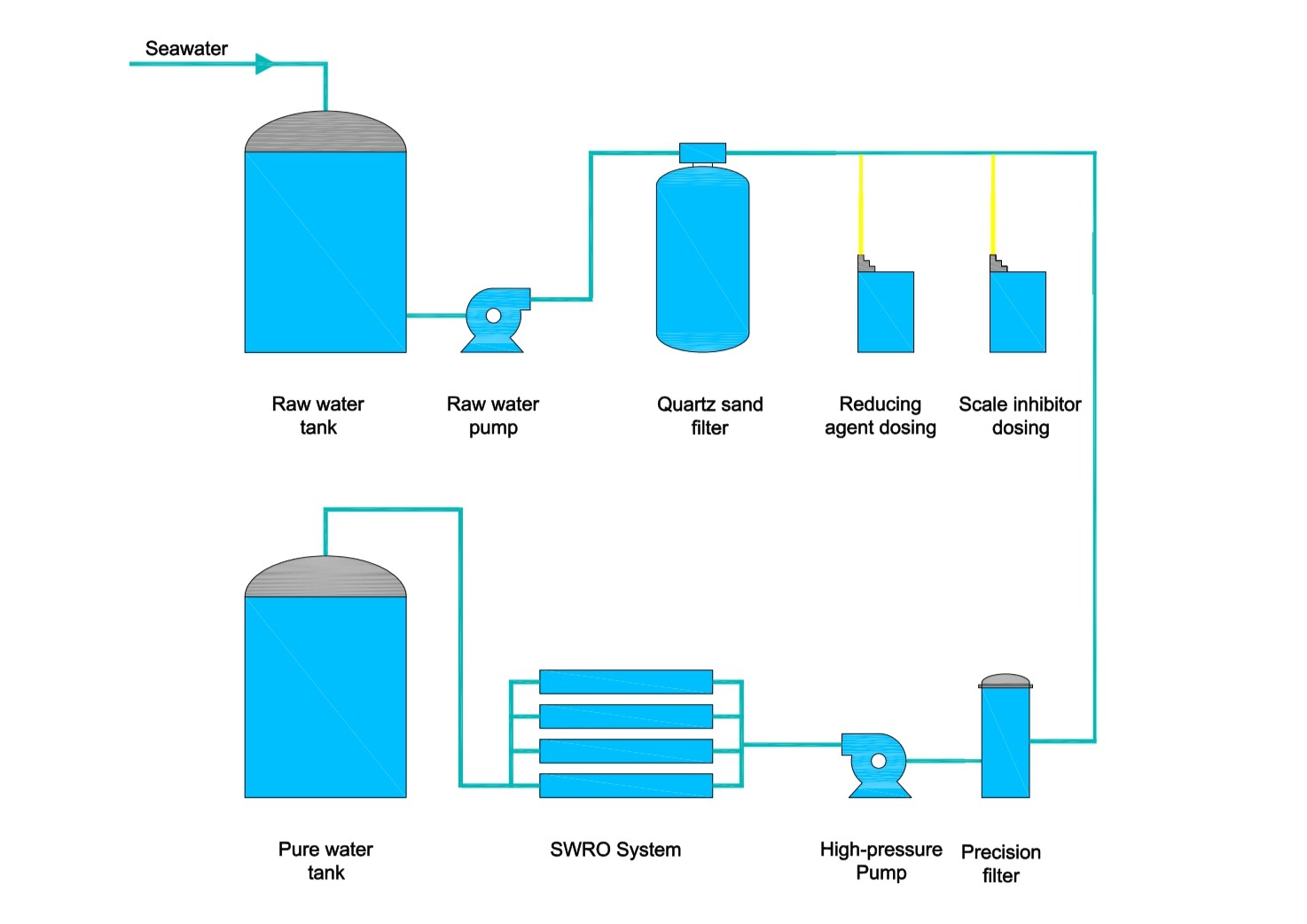
The working flow chart of Seawater Desalination
What are the advantages of Seawater Desalination?
1.Since the whole process is a phase-free process, the energy consumption is low.
2.The equipment cost is low, the device is compact, and it takes up less space, which is easier to be accepted by the civilian market.
3.The reverse osmosis desalination device is very simple to operate and easy to maintain.
What can JUFU water do for you?
JUFU water has many years of international project experience in Seawater Desalination.
We have a first-class technical team to customize services for your project. Whether you are a small residential or a large industrial project such as a municipality or community, you can find the most economical and effective solution at JUFU Water.
We are committed to providing a one-stop solution from “Sea Water” to “Fresh Water” for the world.
What is the main process of Seawater Desalination Equipment?
1: Raw water pump: The raw water pump provides pressure boosting guarantee for the sand filter, carbon filter and fine filter of the reverse osmosis pure water equipment. The water inlet pressure is stable and sufficient, which plays a role of pressure boosting. Ensure that the water pressure after pressure boosting is greater than the permeation resistance of the filter, carbon filter and fine filter, so that the water after pressure boosting can pass through the pretreatment system efficiently and provide sufficient water source for the RO system.
2: Quartz sand filter: The quartz sand filter is a pressure filter. It uses fine quartz sand filter materials of different specifications filled in the filter. When the inlet water flows through the filter layer from top to bottom, the suspended matter and viscose particles in the water are intercepted, thereby reducing the turbidity of the water.
3: Scale inhibitor: Prevent the reverse osmosis membrane element from scaling and clogging on the surface due to long-term operation
4: Reducing agent: Eliminate residual chlorine in the water entering the reverse osmosis membrane
5: Precision filter: Remove fine particles with a turbidity of more than 5 microns to meet the requirements of the subsequent process for inlet water
6: High-pressure pump: The high-pressure pump applies a pressure difference force to the water quality separation of the reverse osmosis RO membrane. In the separation of pure water and concentrated water, the micropores on the surface of the RO membrane are larger than the resistance of the pretreatment, so a high-pressure pump is required to apply high pressure to the pretreated water to penetrate the RO membrane.
7: Reverse osmosis membrane assembly:
The principle of reverse osmosis technology is to separate these substances and water under the action of a pressure higher than the osmotic pressure of the solution, based on the fact that other substances cannot pass through the semipermeable membrane. The membrane pore size of the reverse osmosis membrane is very small, so it can effectively remove dissolved salts, colloids, microorganisms, organic matter, etc. in the water.
8: Ultraviolet sterilization:
The purpose of disinfection is achieved by radiating microorganisms (bacteria, viruses, spores and other pathogens) and destroying the function of nucleic acids to kill microorganisms.