sales@jufuwater.com +8618001362005
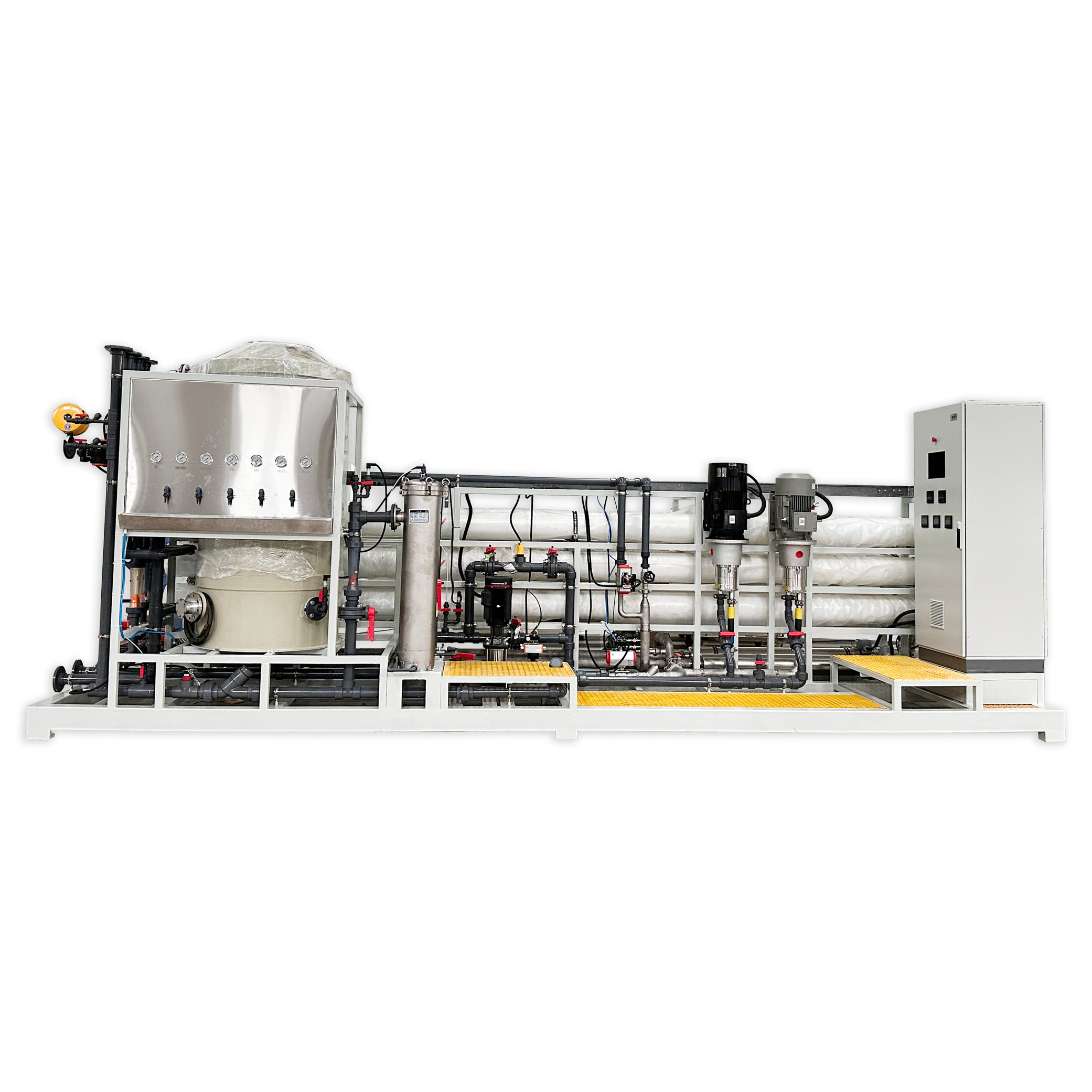
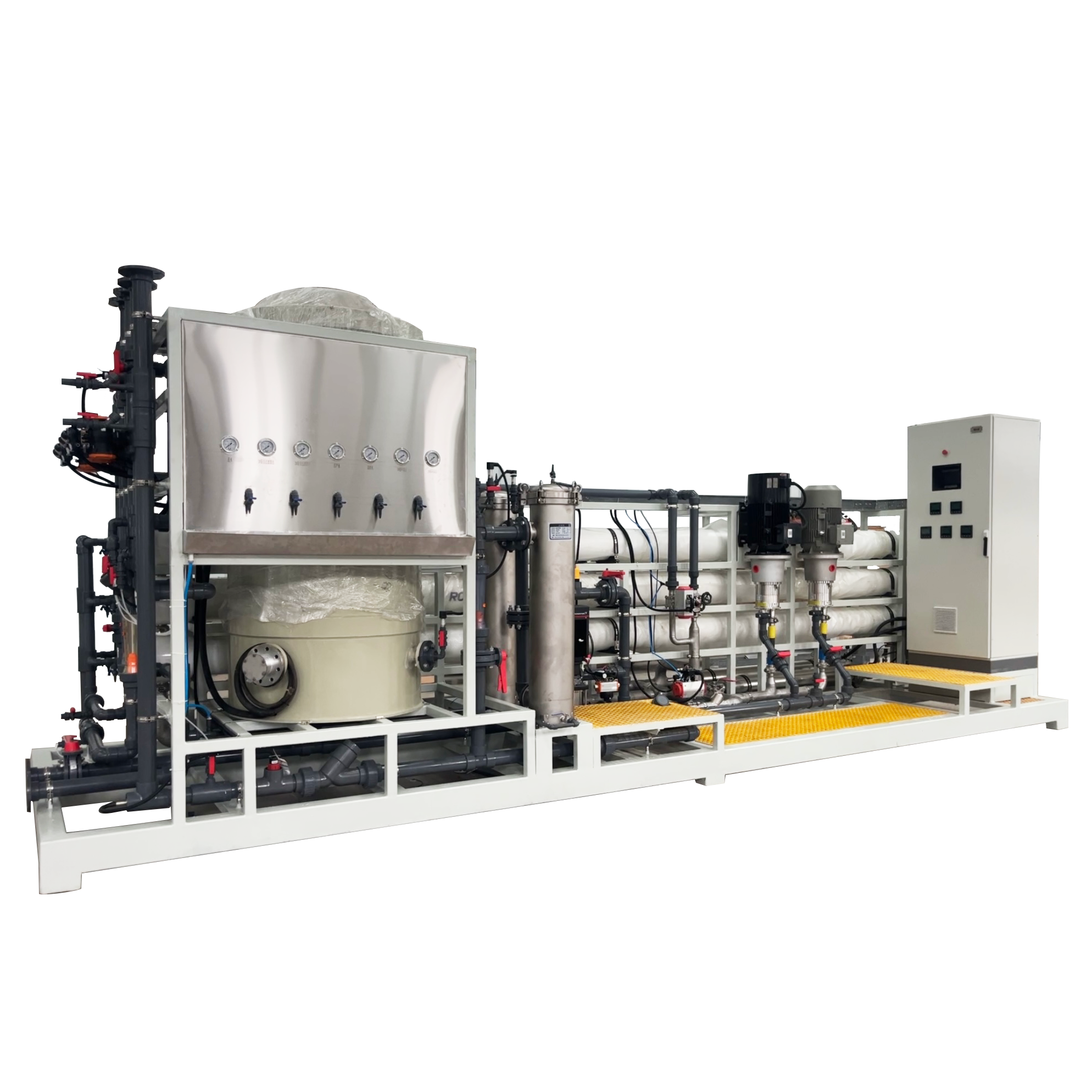
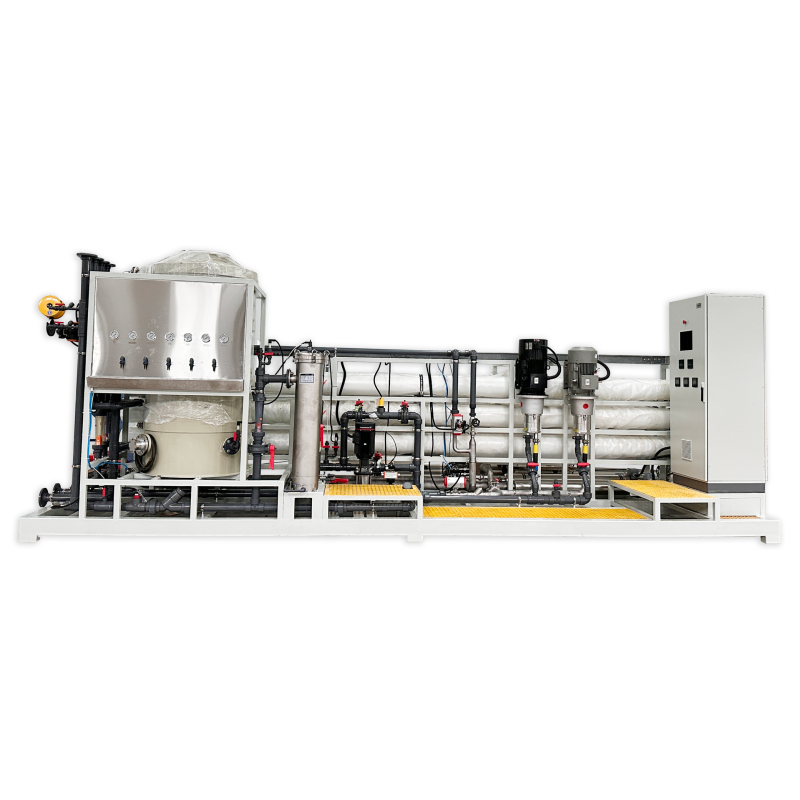
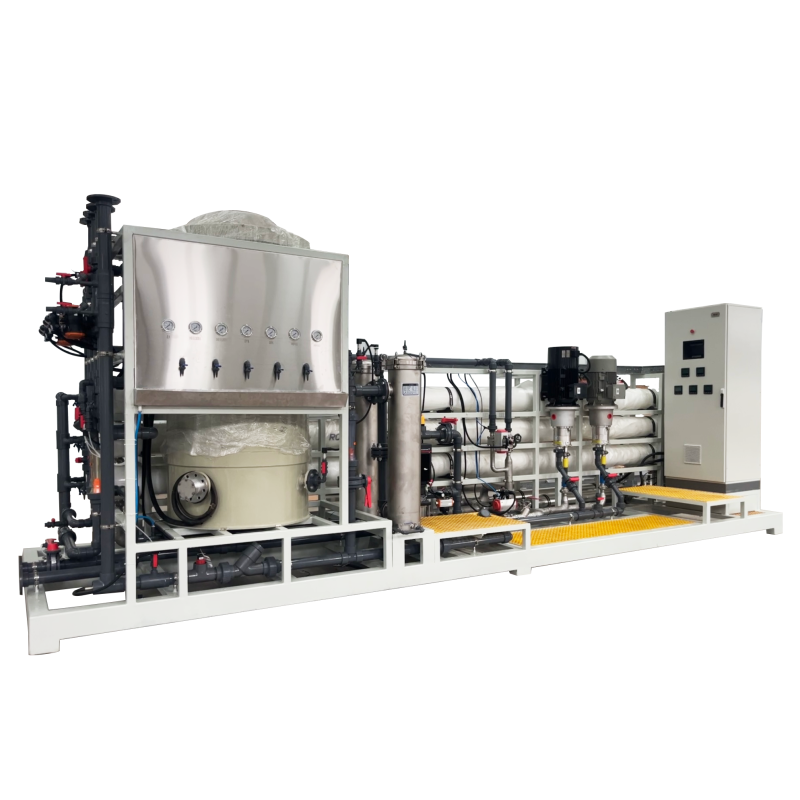
200TPD Large Scale RO Seawater Desalination System
1.Model: JFRO-200TPD
2. ISO9001 & CE certified
3. Capacity: 200ton/day
4. Desalination rate: 98%
5. Recovery rate: 40%
6. Control type: Auto
7. Applicable industries: Industrial water use, agricultural irrigation, domestic water use
8. Pre-shipment testing: Provide
9. Installation guidance: Online Video meeting
10. Warranty: 12 months
11. Package: Wooden case
12. Export market: United States, Spain, Poland, Italy, Australia, Canada, Mexico, Philippines, Peru, Saudi Arabia, Jamaica, Columbia, Chile, Peru,Bolivia, Argentina,Indonesia,Malaysia,Vietnam, Nigeria, Tanzania, Kenya, Morocco,Kyrgyzstan, Russia
What is a Seawater Desalination System?
Seawater Desalination is the process of removing excess salt and minerals from seawater to obtain fresh water.
Seawater Desalination is mainly used to provide drinking water and agricultural irrigation water. It is very popular in areas with very little rainfall. It is also used in some islands and ships. Some thermal power plants and nuclear power plants near the sea also use desalination to produce water for cooling the core.
Why is Seawater Desalination becoming more and more popular?
As the world’s freshwater resources are becoming increasingly scarce, the development and utilization of seawater resources have received a certain amount of attention, and that is when people began to get water from the sea. We all know that although seawater contains many elements that are beneficial to humans, it has a high salt content and will cause harm to the human body after drinking. Therefore, for people in coastal and water-scarce areas, to use seawater resources, it is necessary to build seawater desalination projects.
Reverse Osmosis Seawater Desalination technology, the treatment process is mature and stable, and Reverse Osmosis Seawater Desalination technology can also be combined according to different application requirements to meet the different water needs of users. The application of Reverse Osmosis Seawater Desalination technology for Seawater Desalination, in addition to the high desalination rate, can also intercept harmful substances such as bacteria, viruses, heavy metal ions in the water body, and the effluent water quality meets the national drinking water standards.
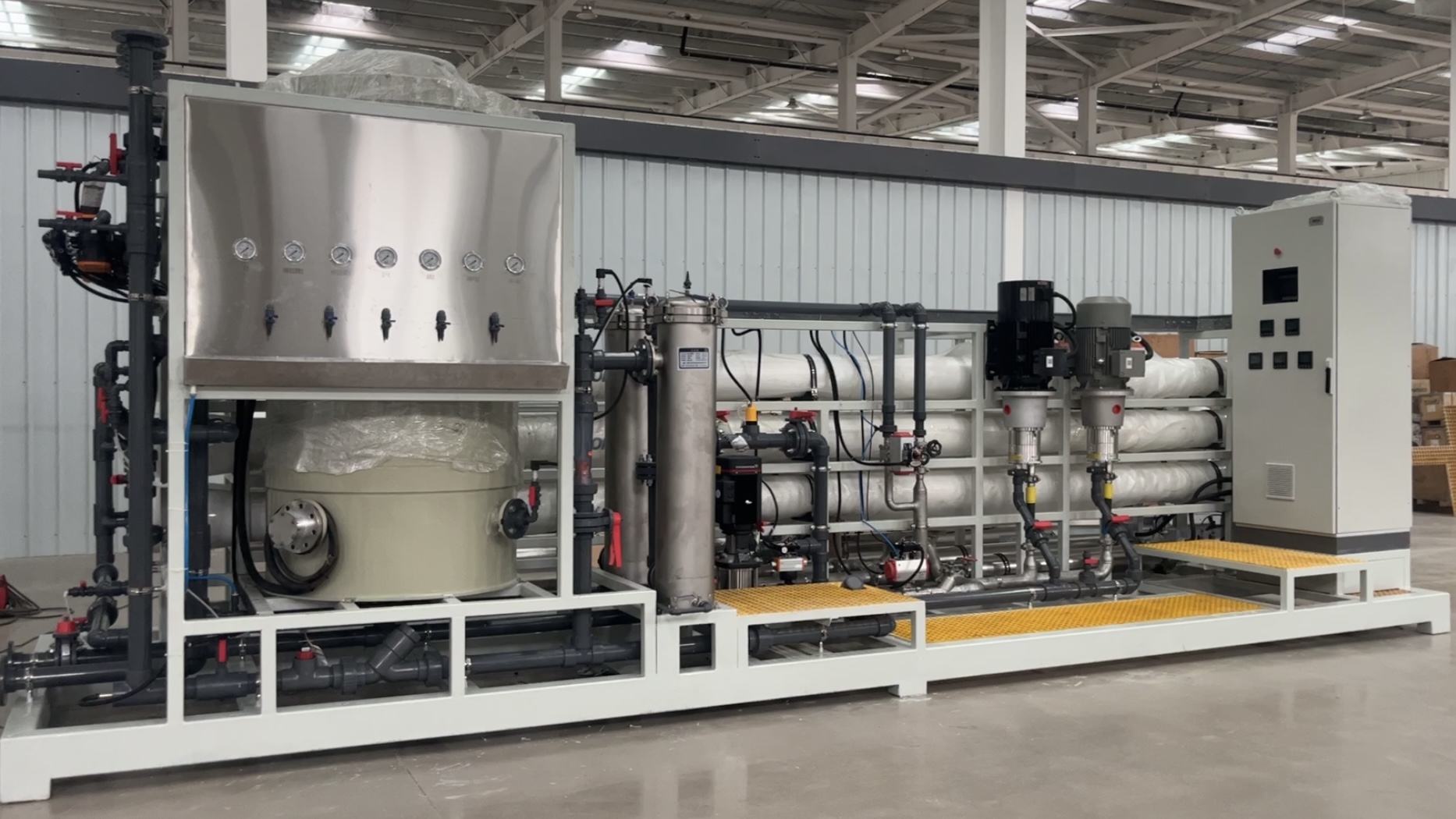
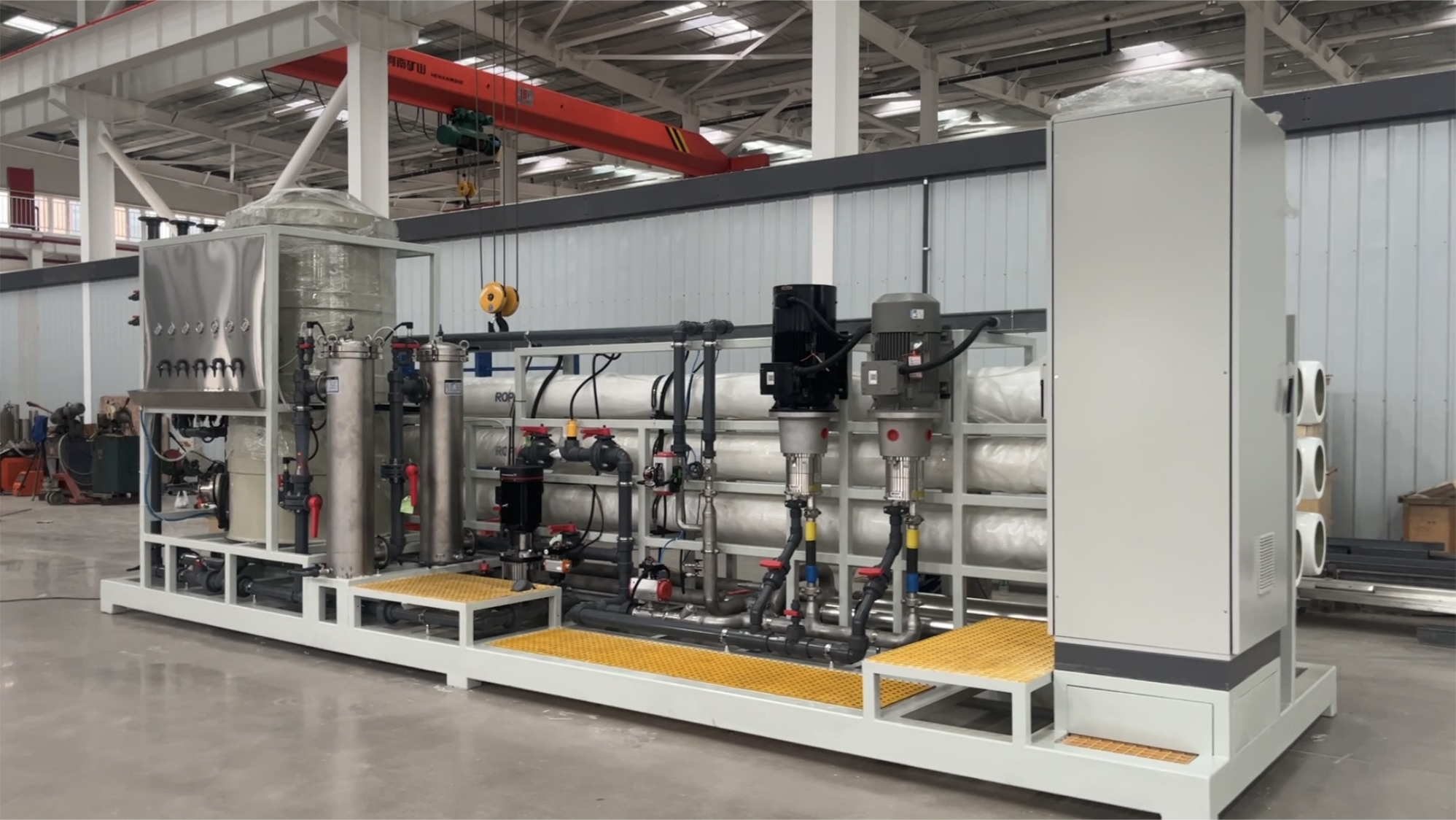
Specification of seawater desalination
| Model | JFSW-200TPD | ||
| Producing Capacity | 200T/D | RO membrane | 8” |
| Recovery Rate | 40% | Power Supply | Single-phase: 110/120/220V 50/60Hz |
| Operating Pressure | 3-5.5MPa | Tri-phase: 110/220/380/415V 50/60Hz | |
| Desalination Rate | 98% | Power Consumption | 75kW |
| Filtration Accuracy | 0.0001 micron | Control Type | Manual control / Auto control |
| Feed Water Quality | SDI<5 Free Chlorine Concentration<0.1mg/L TDS<40000mg/L | ||
| Features | Removes impurities such as inorganic ions, bacteria, viruses, organic matter and colloids from raw water. | ||
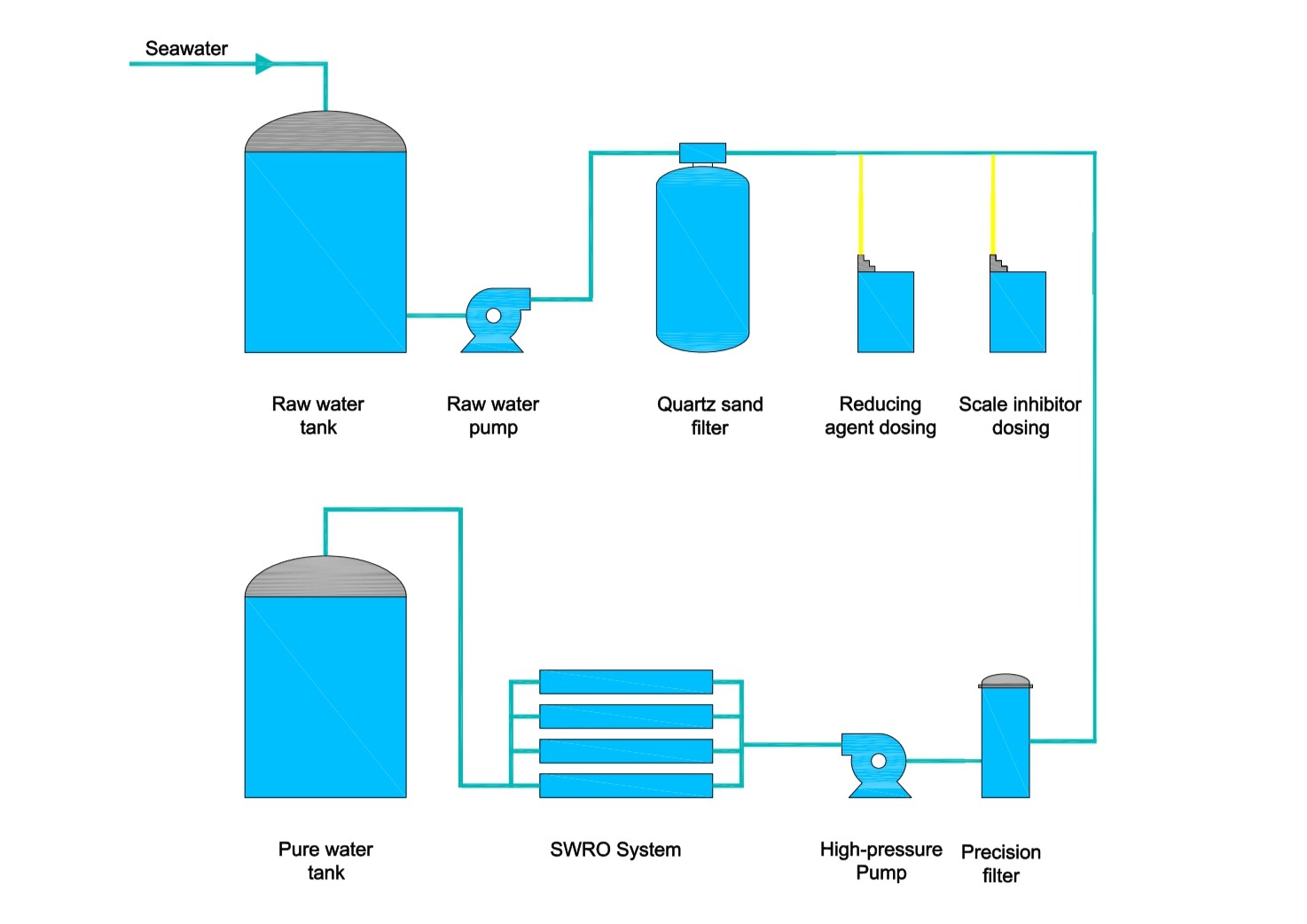
The working flow chart of Seawater Desalination
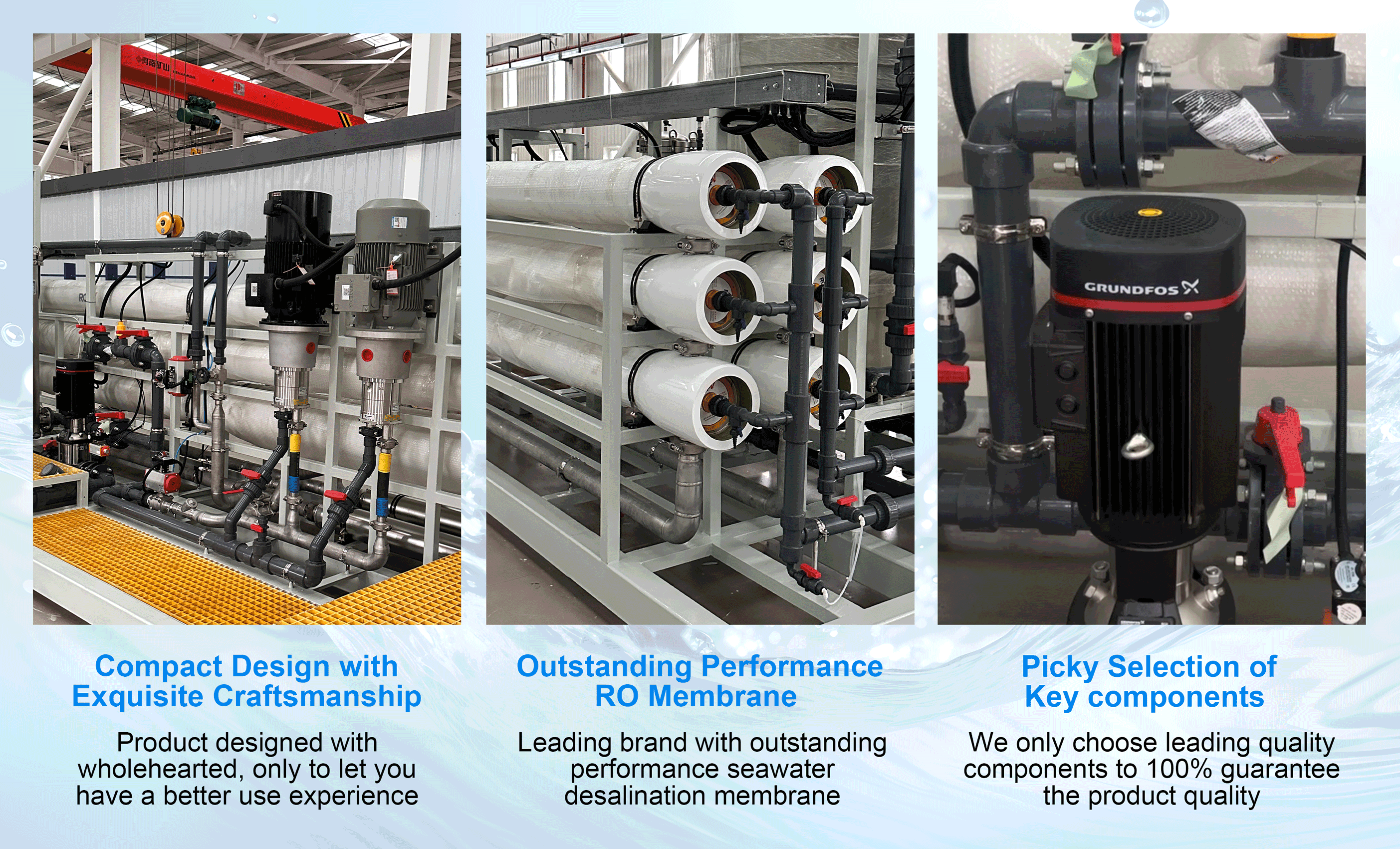
The details of 200TPD RO seawater desalination
What are the advantages of Seawater Desalination?
- Simple operation, water can be produced with electricity.
- No scaling will occur, no corrosion to equipment pipes.
Low operating costs, reliable equipment performance.
- 3. Good water quality, no bitter or salty taste, harmless to the human body, water can be drunk directly.
- 4. In addition to being used for domestic water, freezing fish with desalinated water is several hours faster than freezing fish with seawater (the freezing point of fresh water is low), and the fish can gain an average of 3-5% weight.
What can JUFU water do for you?
JUFU water has many years of international project experience in Seawater Desalination.
We have a first-class technical team to customize services for your project. Whether you are a small residential or a large industrial project such as a municipality or community, you can find the most economical and effective solution at JUFU Water.
We are committed to providing a one-stop solution from “Sea Water” to “Fresh Water” for the world.
What is the main process of Seawater Desalination Equipment?
1: Raw water pump: The raw water pump provides pressure boosting guarantee for the sand filter, carbon filter and fine filter of the reverse osmosis pure water equipment. The water inlet pressure is stable and sufficient, which plays a role of pressure boosting. Ensure that the water pressure after pressure boosting is greater than the permeation resistance of the filter, carbon filter and fine filter, so that the water after pressure boosting can pass through the pretreatment system efficiently and provide sufficient water source for the RO system.
2: Quartz sand filter: The quartz sand filter is a pressure filter. It uses fine quartz sand filter materials of different specifications filled in the filter. When the inlet water flows through the filter layer from top to bottom, the suspended matter and viscose particles in the water are intercepted, thereby reducing the turbidity of the water.
3: Scale inhibitor: Prevent the reverse osmosis membrane element from scaling and clogging on the surface due to long-term operation
4: Reducing agent: Eliminate residual chlorine in the water entering the reverse osmosis membrane
5: Precision filter: Remove fine particles with a turbidity of more than 5 microns to meet the requirements of the subsequent process for inlet water
6: High-pressure pump: The high-pressure pump applies a pressure difference force to the water quality separation of the reverse osmosis RO membrane. In the separation of pure water and concentrated water, the micropores on the surface of the RO membrane are larger than the resistance of the pretreatment, so a high-pressure pump is required to apply high pressure to the pretreated water to penetrate the RO membrane.
7: Reverse osmosis membrane assembly:
The principle of reverse osmosis technology is to separate these substances and water under the action of a pressure higher than the osmotic pressure of the solution, based on the fact that other substances cannot pass through the semipermeable membrane. The membrane pore size of the reverse osmosis membrane is very small, so it can effectively remove dissolved salts, colloids, microorganisms, organic matter, etc. in the water.
8: Ultraviolet sterilization:
The purpose of disinfection is achieved by radiating microorganisms (bacteria, viruses, spores and other pathogens) and destroying the function of nucleic acids to kill microorganisms.